
"
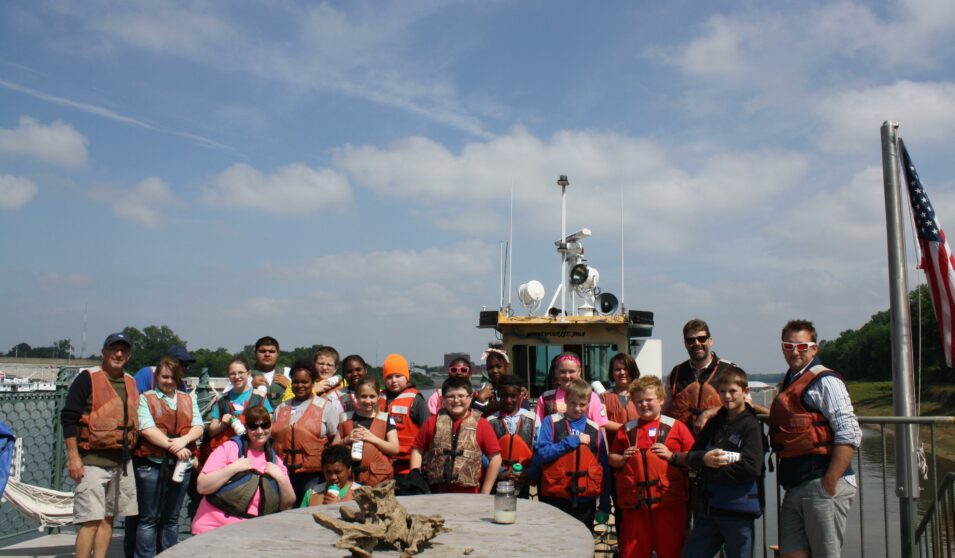
Egyptian school students from Tamms, Illinois pose for a group picture on Living Lands and Waters' House Barge.<\/em><\/p>"
Editor's Note: We want to thank Egyptian students Sha'veh Price and Breyden Martin as well as Southern Illinois University's Dr. Grant Miller for contributing to this article.
The evolution of higher education has had a profound impact on rural America. Hundreds of American regional state universities and colleges were originally established as normal schools to train teachers for the thousands of small schools that dotted the rural landscape. However, as American society became more complex, the old "teachers' colleges" grew more comprehensive and, in many instances, rural issues took a back seat.
We believe rural communities are served well when universities and colleges become more intentional in the development of "rural-centric" programs and partnerships. The Rural Schools Collaborative strongly encourages this kind of collaboration
An excellent example of this kind of partnership is Southern Illinois University Carbondale's work with Egyptian Schools in Tamms, Illinois. The Egyptian PASS (Pyramid of Academic Student Success) is a blended, place-based academic enrichment summer program available to K-10 students enrolled in Egyptian Schools. This summer over a quarter of the district's 400 students are taking advantage of this academic partnership.
A sampling of classes included in the program are Living Lands and Waters, Frogs and Friends, and Origami Mathematics, all taught by SIU faculty members. Dr. Grant Miller, Coordinator and Associate Professor of Social Science Education at SIU and facilitator of the Living Lands and Waters trip, says the program has offered opportunities that would otherwise have not been available to the students. “As part of their summer place-based curriculum, students traveled to Paducah, Kentucky and visited the Living Lands and Waters organization’s living quarters and classroom on a barge to learn about watersheds, pollution in the rivers, invasive species, and the power of one individual from a small rural community who wanted to make a difference.”
The field trip on the Ohio River was a hit among students according to articles in a student-produced newspaper by Breyden Martin and Sha'veh Price. Martin writes, "(we learned) it is important to clean up our environment because we are destroying animal's habitats. If we don't take care of our environment animals will either become endangered or maybe even extinct." Price reports that all of the students had a good time, citing the boat ride and visiting the barge as highlights.
A key tenet of place-based education is that learning activities should have a public purpose. The partnership between Southern Illinois University and Egyptian Schools demonstrates the difference a few committed individuals can make in the educational lives of rural students, and how student learning can play a role in improving the ecosystem of a major American waterway.
For more pictures of the students' experience please check out the Rural Schools Collaborative's Instagram.
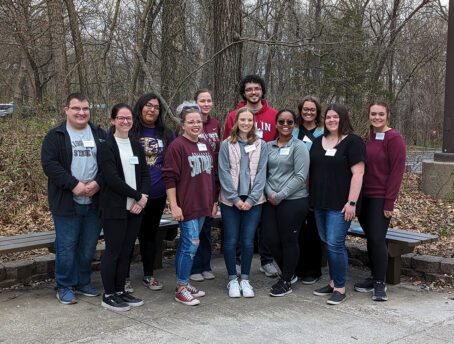
Ozarks Teacher Corps: Rural Place-based Learning in Missouri
April 15, 2024
We joined Teton Science Schools, Community Foundation of the Ozarks, and several RSC Grants in Place veteran teachers at a collaborative, rural teacher corps training in the Missouri Ozarks Hub. The future is bright for these aspiring rural educators!
Regional Hubs, Power of Partnerships, Missouri Ozarks, Place-Based Education, Rural Teacher Corps
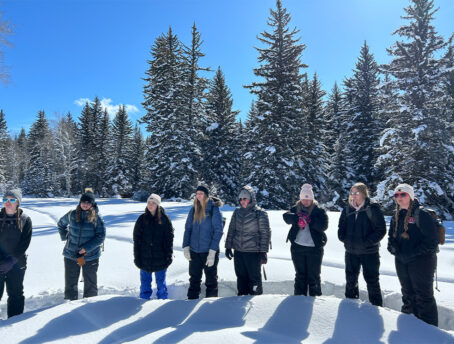
TARTANS Take to Training in the Tetons
April 8, 2024
A unique trip brought together two RSC hub partners for intentional learning, memorable experiences, and crucial relationship building in the beautiful snow-covered Teton Mountains.
Regional Hubs, Power of Partnerships, Illinois, Northern Rockies, Place-Based Education, Rural Teacher Corps, Gratitude
National Signature Project Award: Now Accepting Applications!
March 13, 2024
2024-25 applications are due by May 5, 2024.