
Teaching in Place: Taking Flight
Highland, Wisconsin middle school students record observations at Governor Dodge State Park.
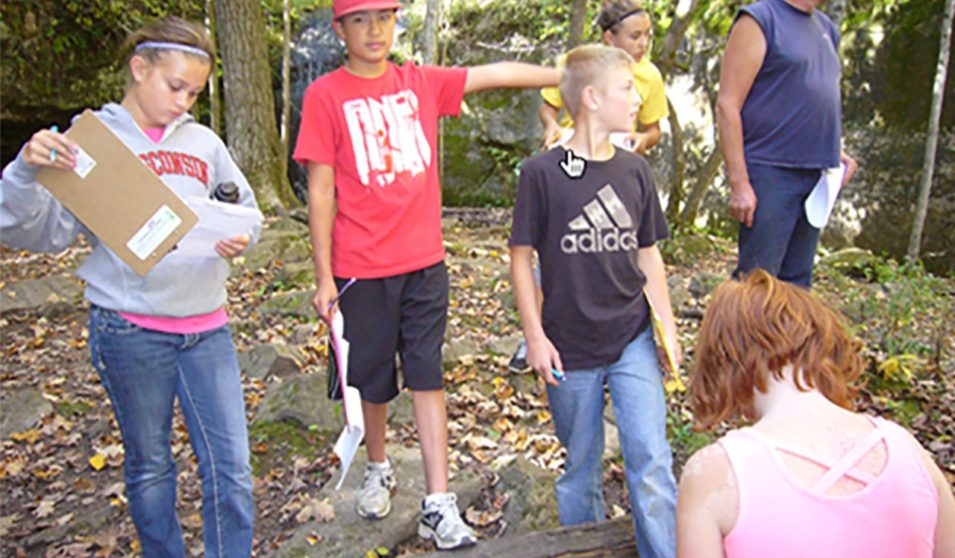
Highland, Wisconsin middle school students record observations at Governor Dodge State Park. <\/p>"
The Madison Audubon Society is quick to remind people that birds are part of a bigger story. It’s a story about prairies, water, climate, and people. And it’s a story about the future, particularly a future that will rely heavily on a new generation of young people with a strong conservation ethic.
With this in mind, the 3,000-member regional Audubon organization has launched the Prairie Conservation Education Grants program, which provides funding for innovative conservation projects in rural schools throughout southern Wisconsin. With support from Rural Schools Collaborative partner Sixteenth Section Fund, Madison Audubon’s new program has already awarded six grants to five rural communities. Highland School District’s “Taking Flight” curriculum is the latest recipient of a Prairie Conservation Education Grant. Highland, a school district with a strong commitment to environmental education, serves a community of 842 people. The village is located in the rolling hills of Wisconsin’s Driftless Region.
Kim Wahl, a F.I.E.L.D. (Fostering Inquiry an Empowering Learners through Discovery) Corps biologist for the Highland School District, directs the Taking Flight program. Wahl’s position, which is made possible in part by the Wisconsin Green Schools Network, spends Tuesdays and Thursdays leading students outside, where they learn more about the natural world through hand-on activities. These experiential lessons will be enhanced by new binoculars, field guides, and a wildlife camera, all provided through the Madison Audubon grant.
This fall, Madison Audubon educators, led by Education Director, Rebecca Ressl, visited Highland Elementary and Middle Schools to teach basic bird identification skills, which students practiced on birding walks. While the elementary students explored the school forest and prairies, the middle school students were provided with an opportunity to hike the trails of nearby Governor Dodge State Park. These excursions were kick-off activities to what will be a year of bird observations, recording, and participating in the national eBird data collection effort.
However, perhaps the most important aspects of the project will be its public outcomes, which are essential to place-based education. Students will construct a birdhouse trail in the village park and plant native wildflowers in the school district’s natural areas. In addition, middle school students will work with Highland officials and community members to help the village gain Bird City Wisconsin status.
Madison Audubon operates out of Madison, one of America’s most thriving small cities. But their service area includes seven mostly rural counties, and the organization’s leadership clearly understands the importance of reaching out to people outside of the metropolitan area. Habitat protection requires urban and rural cooperation, and the Prairie Conservation Education Grant program is an excellent example of how to build meaningful partnerships that benefit the common good.
Madison Audubon and Highland's schools are indeed part of a bigger story; it is a narrative that we all must keep writing.
For more information on the Prairie Conservation Education Grants program, contact Rebecca Ressl at 608-255-2473 or rressl@madisonaudubon.org. Thank you to Madison Audubon for providing information, text, and visuals for this feature. The Sixteenth Section Fund supports conservation education and place-based instruction in Illinois and southern Wisconsin. The Galesburg Community Foundation manages the Fund.
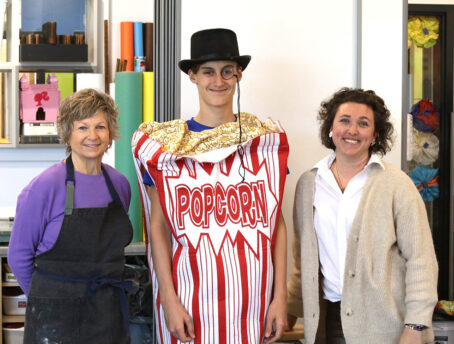
ROOTed In Place Project Spotlight: Planting Popcorn and Purpose in North Utica, Illinois
April 22, 2024
Exploring the k-8 interdisciplinary education popcorn project in rural North Utica, Illinois.
Place-Based Education, Local Philanthropy
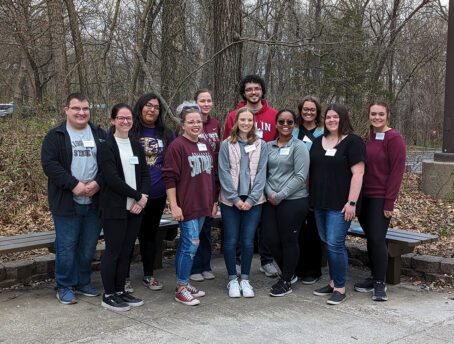
Ozarks Teacher Corps: Rural Place-based Learning in Missouri
April 15, 2024
We joined Teton Science Schools, Community Foundation of the Ozarks, and several RSC Grants in Place veteran teachers at a collaborative, rural teacher corps training in the Missouri Ozarks Hub. The future is bright for these aspiring rural educators!
Regional Hubs, Power of Partnerships, Missouri Ozarks, Place-Based Education, Rural Teacher Corps
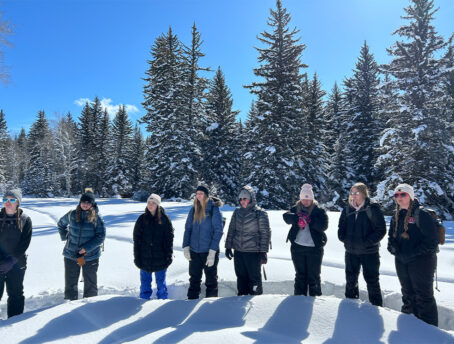
TARTANS Take to Training in the Tetons
April 8, 2024
A unique trip brought together two RSC hub partners for intentional learning, memorable experiences, and crucial relationship building in the beautiful snow-covered Teton Mountains.